

Performing Process, Hiding Power
Theater Everywhere

Social feeds now overflow with “behind the scenes.”
A messy desk. A whiteboard of arrows. A team huddle caught mid-laugh.
It looks like honesty. It reads like confession. It is, mostly, staging.
The comfort of staged transparency
Social media has refined a simple trick.
Show just enough of the process to feel human, never enough of the structure to feel political.
Brands and creators lift the curtain, but only on safe details. The desk can be a disaster. The meeting can look chaotic. The camera can wobble. What never appears are the rooms where money is approved, people are cut, or strategy is set.
Marketing playbooks now recommend this. Share “failed launches” and “weird pivots.” Show a little friction. Let the audience see that things almost fell apart. People “lean in” at the sight of minor risk, and the algorithm rewards it. The result is a narrow kind of visibility: small stumbles are public, real stakes remain private.
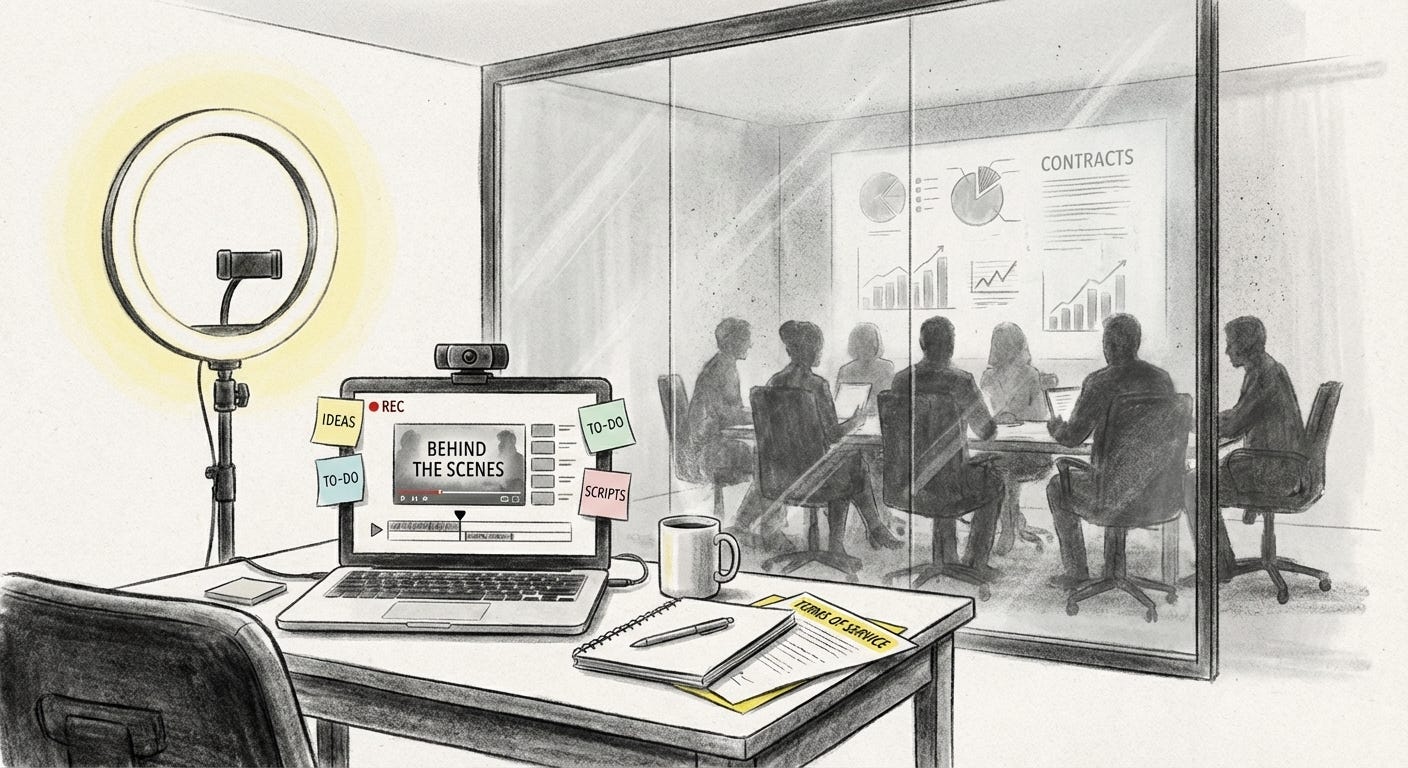
We are allowed to see the mess, never the terms.
Real people as interface
In a landscape of faceless ads and AI-generated content, almost any human moment feels rare. Social media analysts have put it bluntly: “real humans stop the scroll.” So brands design for that feeling.
One resort-wear label run by an influencer founder has essentially abandoned glossy product ads on TikTok. Instead, its account serves pranks, office jokes, and “unfiltered” team vlogs. Followers see hoodies being tried on, in-jokes in the studio, small dramas over sample delays. The company feels less like a brand and more like a group chat.
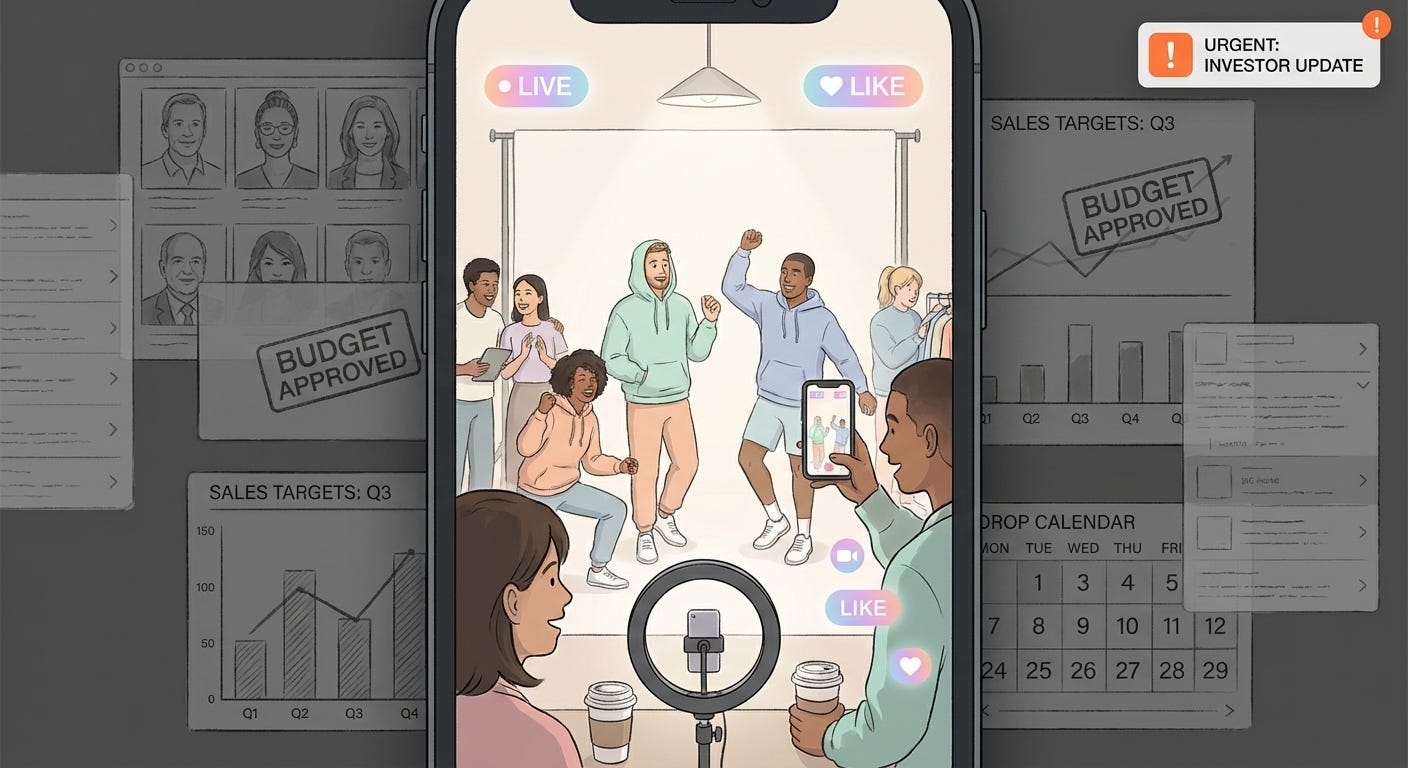
What never appears is who funded the line, who signs off on the shoot budget, or how much each drop needs to sell to keep going. Labor fills the frame. Leverage stays behind it.
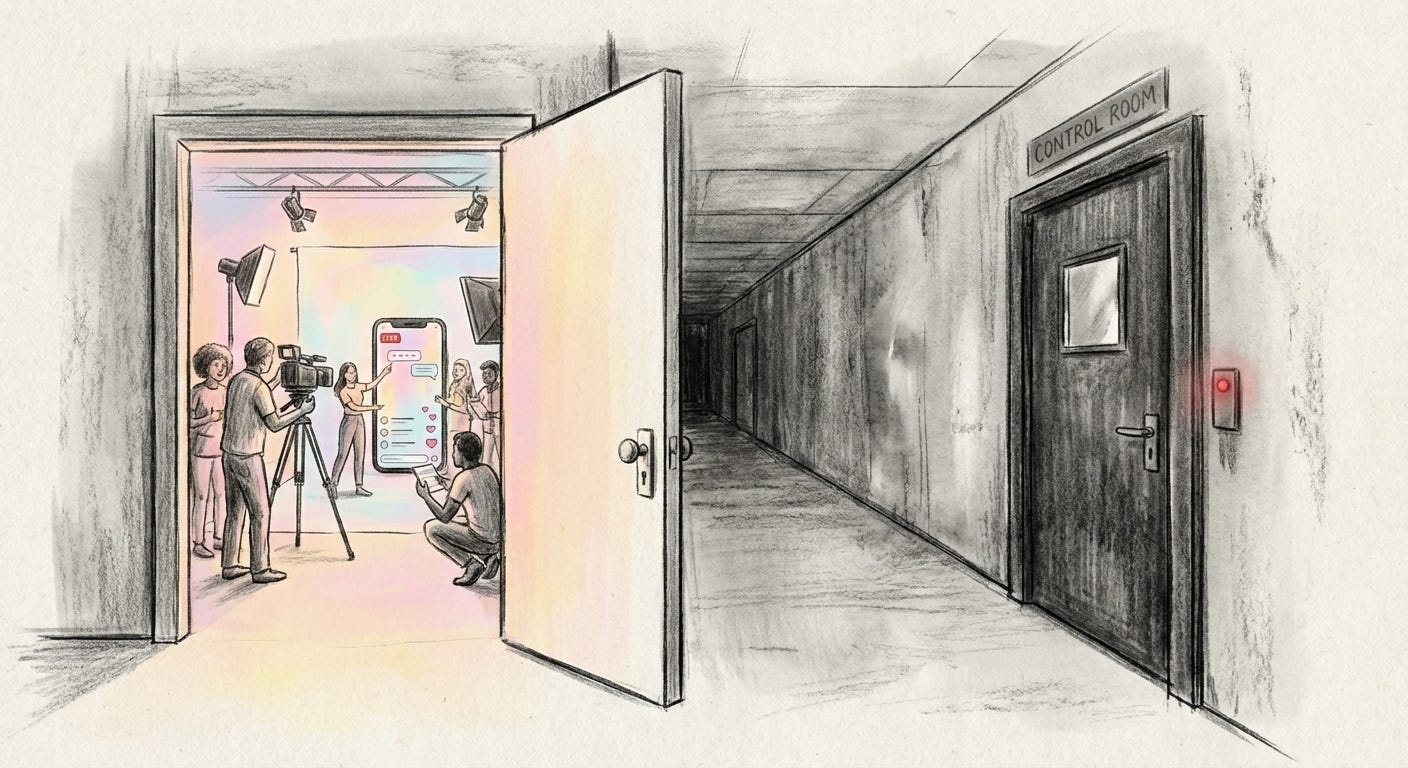
Larger firms follow a similar pattern. An SEO company invites staff to post Zoom bloopers and coffee runs. A fashion retailer has floor staff film themselves styling mannequins between customers. These clips foreground “the people behind the brand,” as one social strategist says. The intern, the shop assistant, the junior marketer all become the face of the company.
Their presence softens the institution. Their pay grade does not change.
Institutions learning to perform “real”
Cultural institutions have learned the same language.
A major UK museum recently wrote about how TikTok helps them feature “real people” in casual, everyday scenes. One widely shared example came from a national arms collection. A curator described Tudor history in Gen Z slang, calling Henry VIII “the original rizzler.” The clip went viral and visitor numbers reportedly jumped by more than half.
On screen, the museum feels alive and approachable. History feels lighter, funnier, somehow closer to daily life. Yet this view opens only a narrow slice of the institution. We see the curator, not the donor list. We hear the slang, not the funding conditions or the curatorial compromises made to keep sponsors comfortable.
The performance of authenticity stops at the threshold of power.
The human face is fully lit; the hand that directs it stays off camera.
Seeing labor, missing leverage
Across brands, agencies, and museums, the pattern is the same.
We are invited into the backstage corridor, not the control room.
We see the cluttered desk and the scrawled whiteboard. We see the mannequin being dressed and the curator rehearsing a joke. These are real moments, and often real workers, folding their personalities into the job because the platform now demands it.
What we do not see are the hierarchies that decide who appears on camera, who stays in spreadsheets, and who never gets hired at all. We do not see how much unpaid emotional labor goes into being “relatable” on command. We rarely see the people who have enough distance and security that they never need to appear online to keep their status.
For viewers, the effect is strangely gentle. We feel closer to the teams. We feel we understand the process. The mood is intimate, even slightly melancholic: people trying, improvising, getting through the day.
But we do not feel any closer to the stakes.
The budgets, the ownership structures, the crisis calls at midnight, the decisions that shape many lives at once remain out of frame.
The feed asks us to confuse proximity with participation. We are allowed to stand inside the scene, as long as we do not ask who wrote it.
The curtain is open just enough to let us in, not enough to let us see.
Visual archive → afterimage
You’re reading Anaesthetik. The connection got louder. We feel less.