

Authenticity Filters
The Simulation of Sincerity in Digital Media

Apologies perform well online.
So do breakdowns.
Our feeds are full of people and brands baring their souls, or pretending to. The unease sits underneath: sincerity has been turned into a format.
What looks like authenticity is often just a delivery system for influence.
The performance of being sorry
Your feed asks you to feel something. A brand issues what looks like a crisis statement. Neutral background. Serious typography. A bold title: “Official Apology Statement.”
You stop scrolling because you recognise the form. It looks like a public reckoning. The language is familiar: “It has come to our attention… We sincerely apologize…” It borrows the tone of legal counsel and institutional guilt.
Then you reach the third line and discover the twist.
The brand is “sorry” for making their fries too delicious.
Or for “spoiling” customers with such low prices.
The structure of remorse has been emptied out and refilled with promotion. The post works because it hijacks the emotional expectation of a scandal. We arrive prepared to witness consequence. Instead we receive flattery disguised as contrition.
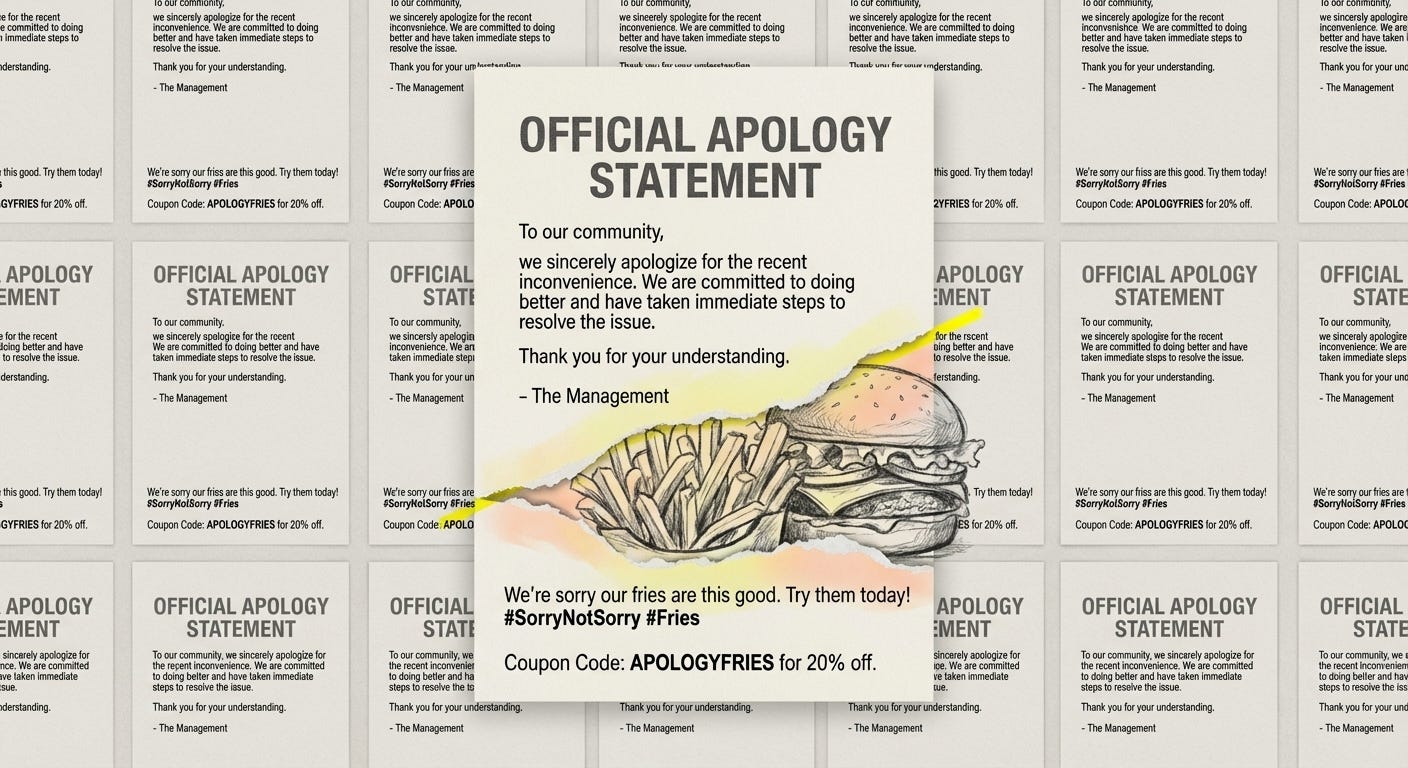
The comfort is for the brand and its fans. The company gets engagement and shareable “humility.” Followers enjoy the drama without having to confront real harm. People who have experienced actual institutional apologies, often forced and inadequate, see the gesture turned into a visual joke.
Sincerity becomes a costume. The template circulates. Agencies build versions into their content calendars. Apology design gets folded into the marketing toolkit, just another frame for the same message: we are good, you are safe with us.
Intimacy as a content format
If Instagram simulates institutional sincerity, TikTok simulates the private call.
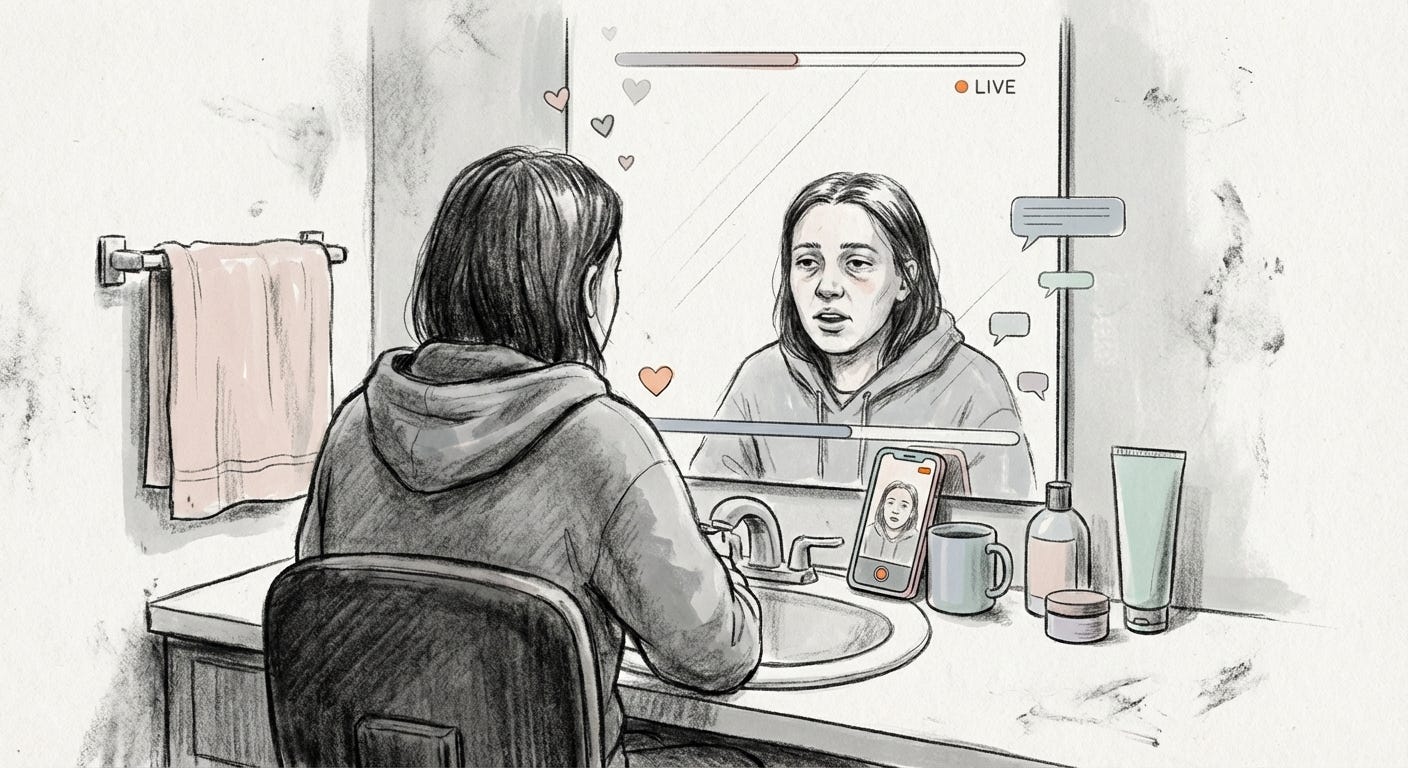
“Get Ready With Me” videos use the bathroom mirror or bedroom vanity as a stage. A creator does their morning routine while narrating a story that sounds like it belongs in a group chat. The visual cues are domestic: soft light, rumpled bedding, a hoodie instead of a blazer. It feels like they propped the phone against a mug and started talking.
One creator filmed herself applying makeup on the morning of her grandfather’s funeral. She described her grief, her anxiety, the small rituals that made the day bearable. She noted that showing herself “pre-grooming” was important. It created what she called the “FaceTime effect.” The impression that you are not watching content, you are keeping someone company.
The scene reads as unfiltered care. In reality it is also a format with known rewards. The arc is familiar. A vulnerable setup. A confession. A lesson for the viewer. A product recommendation or subtle brand tie-in. Every nod to the camera, every pause, has been tested by the platform’s logic. What seems like messy honesty is structured performance that fits neatly into the feed.
Who is comforted here. The viewers, who feel less alone for the length of a clip. The creator, who can alchemise private pain into reach and revenue. The platforms, which extract time, data and ad inventory from both.
Who carries the cost. The constant pressure on creators to keep mining their inner life to stay visible. The audience, whose empathy is turned into a renewable resource. The more intimate it feels, the better it converts.
Friendship becomes a user interface. What looks like a one to one call is in fact a one to many broadcast, tuned by metrics, sold back to advertisers as “authentic engagement.”
Thumbnails that scream, feelings that flatten
On YouTube the sincerity signal is compressed into a single frozen frame.
Thumbnails have evolved into a race of exaggerated faces and fluorescent typography. Eyes wide. Hands on cheeks. Mouths stretched open in shock. Red arrows and urgent words promise betrayal, disaster, revelation. In a crowded sidebar, the loudest emotion wins.
At first, these images stand out. They promise that something serious is at stake inside the video. Over time, as more creators adopt the same tactics, the effect blurs. Every video seems to be about the worst day, the biggest twist, the most emotional moment.
When everything screams, nothing does.
The visual language of crisis becomes a default skin for ordinary content. Genuine distress, when it appears, has to compete with thousands of staged gasps. The viewer learns to treat all of it as the same genre of noise.
The comfort is for the system itself. Hyperbole keeps clicks flowing. Creators who refuse the game often disappear below the fold. Viewers become efficient skimmers of outrage, trained to respond to symbols of feeling instead of the feeling itself.
Trust that feels earned, but is manufactured
Despite the fakery, it often works.
Influencers and brands rely on something close to parasocial gravity. The more someone appears open, flawed and approachable, the more we fill in the blanks. We think “they know me,” “I trust them.” That impression is then welded to products, courses, causes.
Analysts of creator culture boil it down bluntly. The path from scroll to buy is paved with trust, or what feels like trust. Perceived authenticity, personal disclosure and a sense of access all make people more likely to accept advice, repeat talking points or purchase without much scrutiny.
This is not just an emotional accident. It is a sales strategy. The illusion of friendship subsidises the business model. Warmth covers for the asymmetry. One side knows the numbers and the script. The other side simply feels accompanied.
Inside the glass, on the content side, people learn to package sincerity so it performs. Outside the glass, on the audience side, people absorb these signals as proof of character. The same gestures hold different stakes depending on where you stand. For someone already comfortable, this is a gentle entertainment, a background hum of stories. For someone under pressure, it can quietly shape what they aspire to, who they believe, and what they spend scarce attention and money on.
Empathy as a drained resource
All of this has a cost that rarely shows up in dashboards.
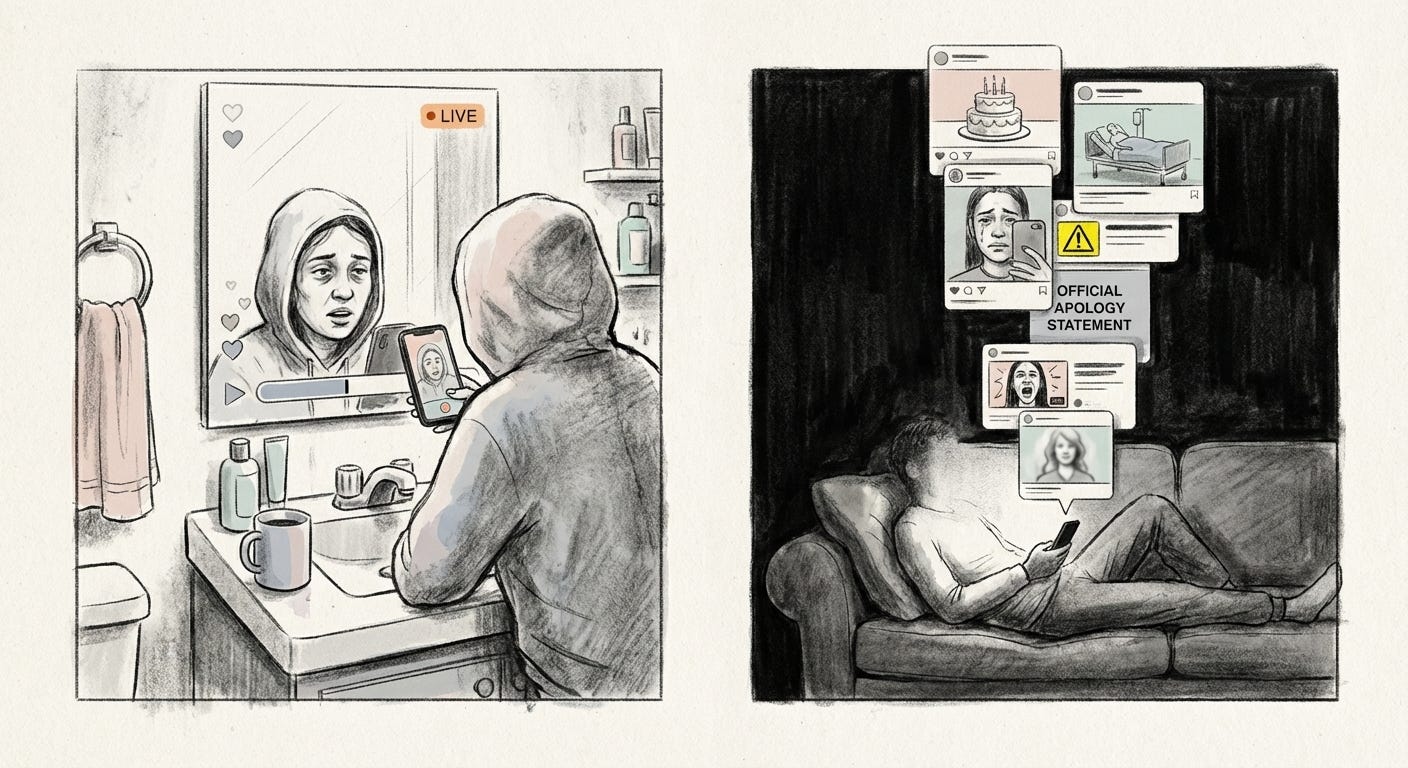
Therapists who watch social media habits closely describe a particular kind of exhaustion. Every scroll becomes an “emotional buffet.” A birthday celebration. A hospital update. A brand’s tearful founder story. A stranger’s panic attack in the car. The nervous system does not distinguish neatly between staged and sincere.
Over time, something gives. The term some counselors use is “empathic distress fatigue.” We take in a constant flow of other people’s feelings, real or simulated, while neglecting our own. It becomes harder to respond fully when something serious happens in front of us. Real life grief feels oddly faint. A friend’s joy lands less sharply.
The very formats that demand more and more visible emotion create an atmosphere of numbness. Openness becomes another aesthetic. Confession becomes another growth tactic. Sincerity becomes another slider to tweak.
For the platforms, this is sustainable. Numb people still scroll.
For advertisers, it may even be ideal. Numb people buy comfort.
For users, it is a quiet hollowing out of one of the few things that still connects us: the ability to feel with, not just feel at.
In a world of simulated sincerity, we risk losing the instinct to tell the difference.
Visual archive → afterimage
You’re reading Anaesthetik. The connection got louder. We feel less.